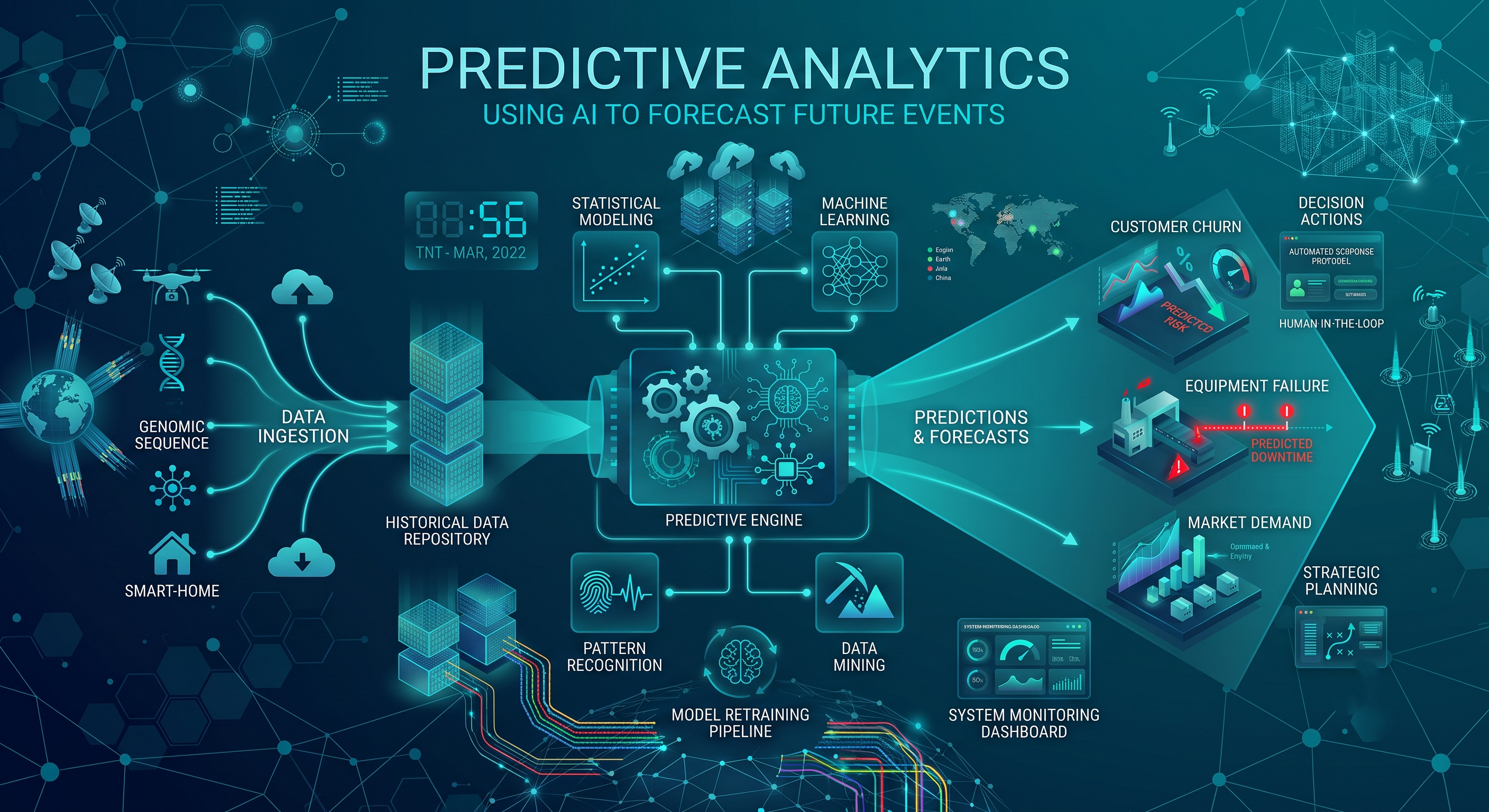
Predictive analytics is the use of historical data, statistical algorithms, and machine learning techniques to estimate the likelihood of future outcomes or to forecast future values of a metric the business cares about. It sits between descriptive analytics (what happened) and prescriptive analytics (what should we do about it), answering the specific question of what is likely to happen next, with what degree of confidence.
What is Predictive Analytics
In practical business terms: descriptive analytics tells you last quarter's churn rate was 8%; predictive analytics tells you which specific customers, out of your current base, are most likely to churn in the next 60 days, ranked by probability, so a retention team can act on the highest-risk accounts first rather than treating every customer identically.
By integrating these predictive models into your daily operations, you can optimize resource allocation, mitigate risks before they materialize, and uncover new revenue opportunities hidden within your data.
Key Features
End-to-end CI/CD pipelines for models
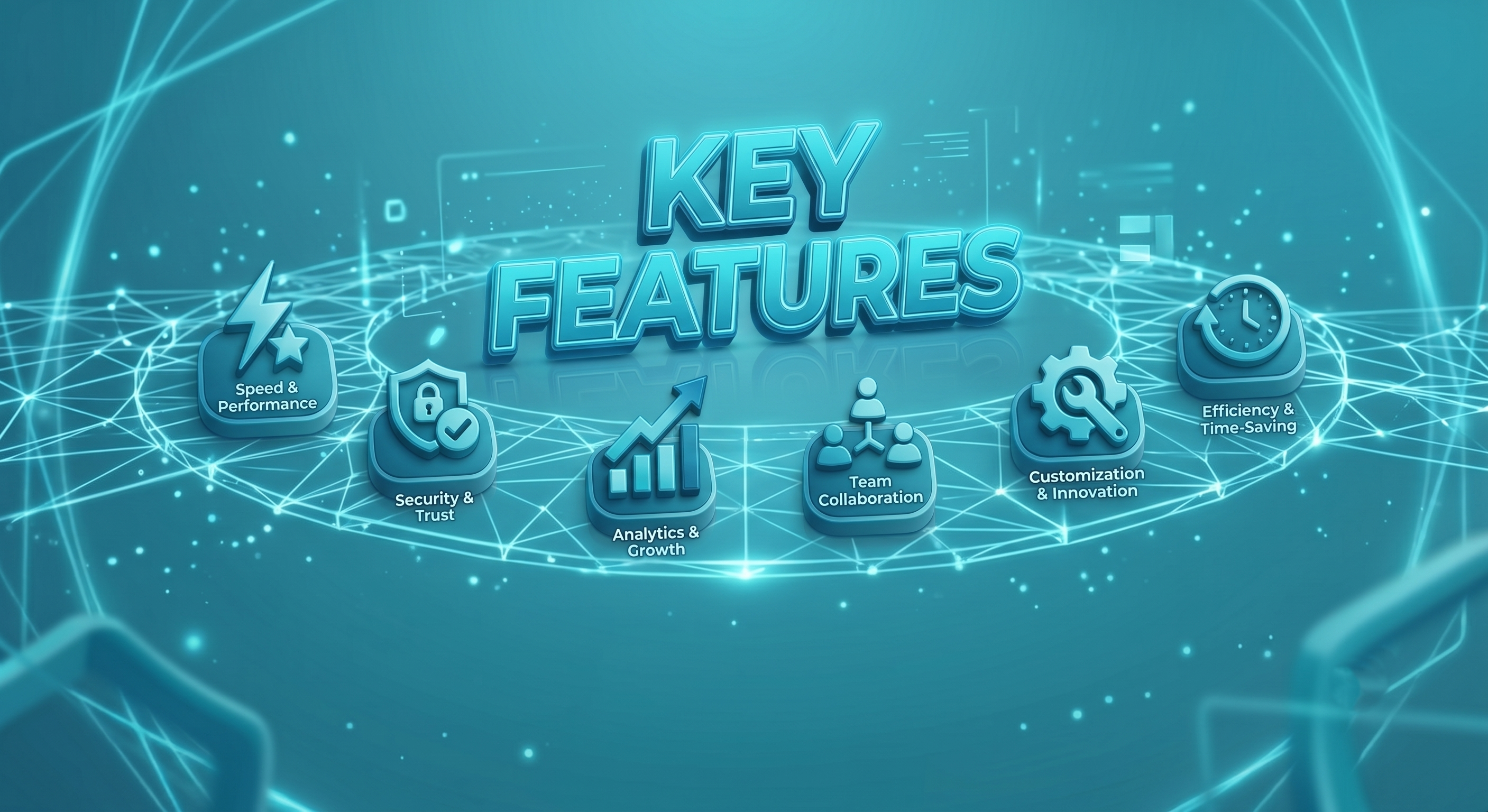
Our predictive analytics services are engineered to produce models that decision-makers can actually trust and act on, not just impressive accuracy scores in isolation.
Model registries with full lineage tracking
Every deployed model is traceable back to the exact code version, training data snapshot, and hyperparameters that produced it.
Real-time and batch monitoring dashboards
Live visibility into prediction latency, throughput, input data drift, and accuracy decay, surfaced to both engineering and business stakeholders.
Automated rollback and canary deployment
New model versions are rolled out gradually and automatically reverted if live performance dips below defined thresholds.
Feature store implementation
A single source of truth for features used across training and serving, eliminating the common and costly bug of training-serving skew.
Multi-environment infrastructure as code
Reproducible dev, staging, and production environments defined declaratively, removing "it worked on my machine" failures.
Governance and approval workflows
Configurable human-in-the-loop checkpoints for regulated industries where a model cannot go live without sign-off.
Why Businesses Need Predictive Analytics
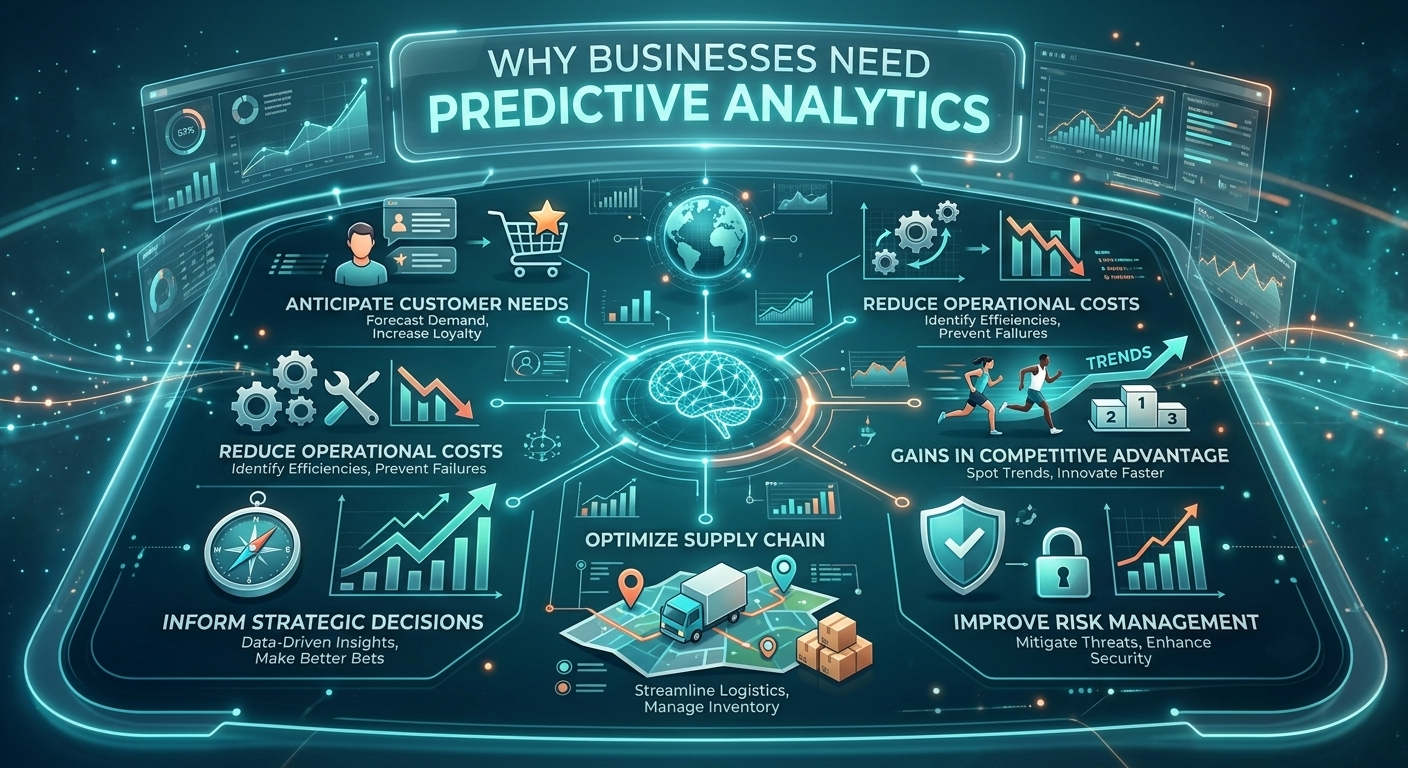
The fundamental argument for predictive analytics is that businesses are making forward-looking decisions constantly - how much to produce, who to retain, who to lend to, what to stock - whether or not they have a formal model to support those decisions. The only real question is whether those decisions are being made on a statistically grounded estimate or on intuition and a spreadsheet extrapolated from last year.
Manual forecasting approaches, however experienced the person doing them, tend to break down in three predictable ways: they do not scale to thousands of individual predictions (a sales manager can intuit which of ten accounts is at risk, not which of ten thousand), they struggle to incorporate more than a handful of variables simultaneously, and they carry no quantified measure of how confident the estimate actually is. A properly built predictive model addresses all three limitations directly, incorporating dozens or hundreds of variables, scoring an entire customer base or product catalogue simultaneously, and attaching an explicit confidence level to every output.
There is also a compounding cost argument. Every month a model runs without proper monitoring is a month of accumulating risk - the longer drift goes undetected, the more decisions get made on a degraded model, and the more expensive the eventual correction becomes, both financially and reputationally. Conversely, organisations that have matured their MLOps practice consistently report being able to deploy new models and model updates several times faster than peers still relying on manual processes, turning operational reliability into a genuine competitive speed advantage rather than just a risk-reduction exercise.
Industries Using Predictive Analytics
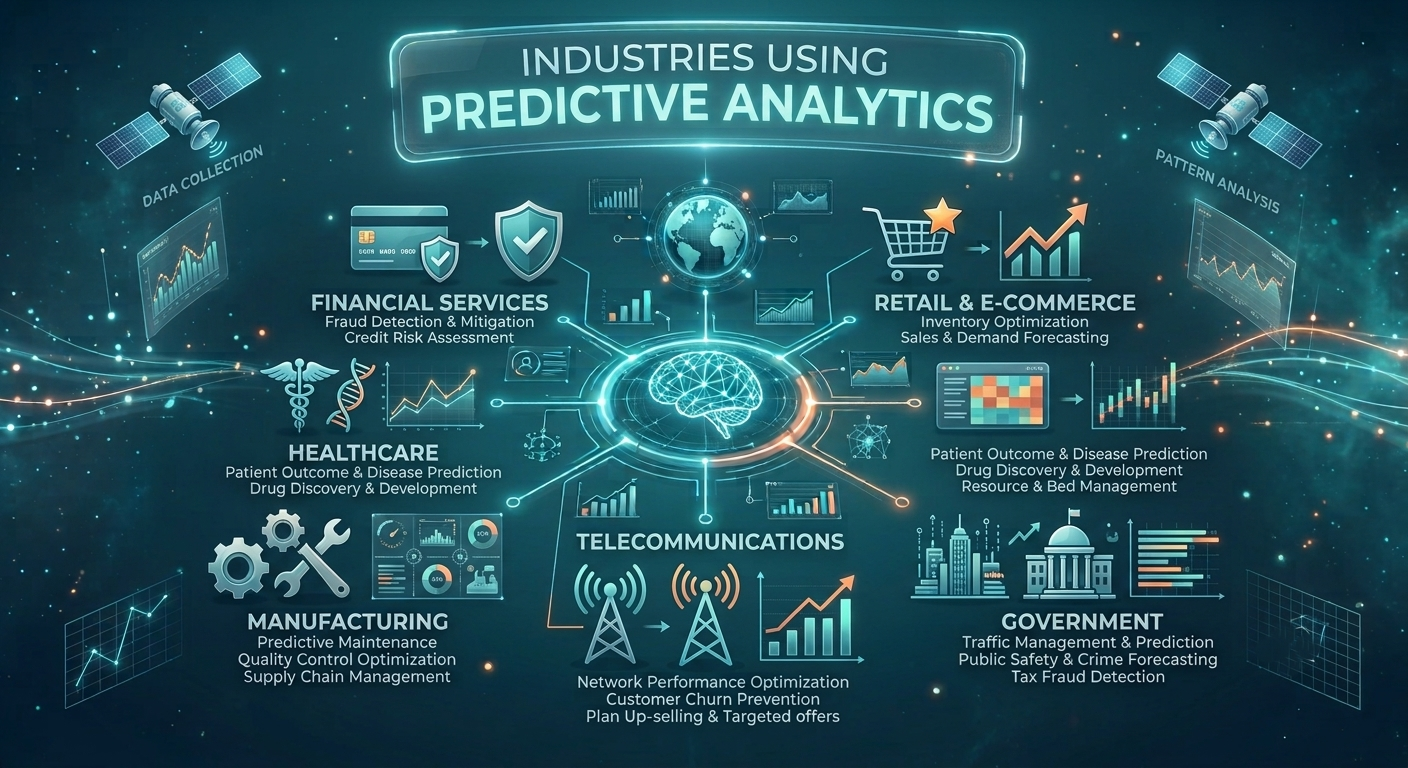
Predictive analytics is arguably the most horizontally applicable machine learning capability we deliver, with strong, well-proven use cases across nearly every sector we serve.
E-commerce & Retail
Product recommendations, cross-sell/upsell, personalised homepage merchandising
Media & Streaming
Content recommendations, next-episode suggestions, personalised content discovery
SaaS & Technology Platforms
Feature and module recommendations, in-app content surfacing, onboarding personalisation
Travel & Hospitality
Destination, accommodation, and activity recommendations based on traveller profile
EdTech & Online Learning
Course and content recommendations based on learning history and goals
Marketplaces
Listing recommendations for buyers, personalised search ranking
Food Delivery & Quick Commerce
Restaurant and item recommendations based on order history and time of day
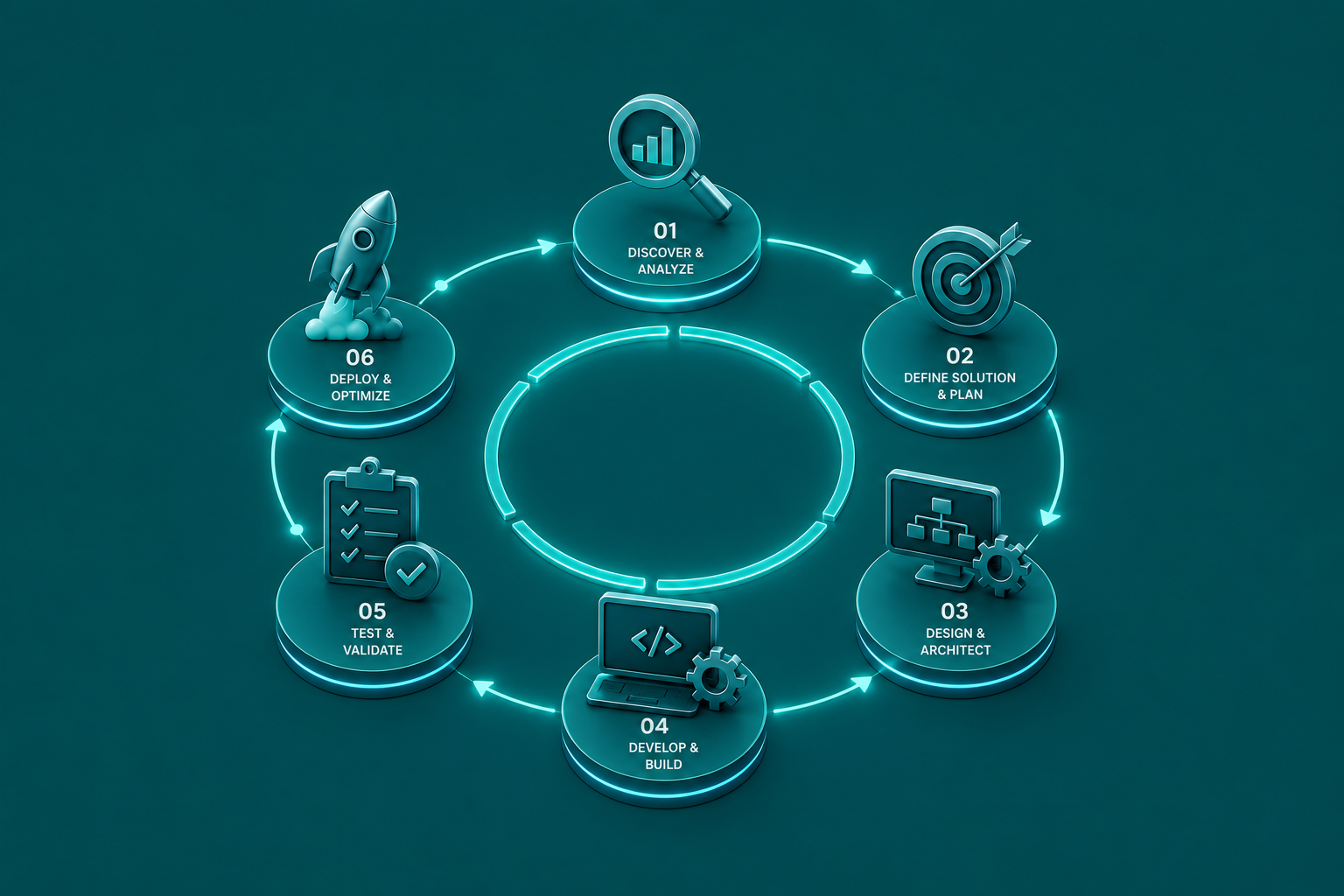
Why Choose Our Company


FAQs
1. What is the difference between predictive analytics and business intelligence (BI)?
Business intelligence describes and summarises what has already happened in your data, while predictive analytics uses that historical data to estimate what is likely to happen next - the two are complementary, with predictive analytics typically built on top of a solid BI and data foundation.
2. How much historical data do we need for predictive analytics to work?
It depends on the use case, but as a general guide, at least twelve to twenty-four months of relevant historical data is preferable for most forecasting and risk-scoring problems, particularly where seasonal patterns matter, though shorter histories can sometimes still support useful models for high-frequency behavioural predictions.
3. How accurate can we expect a predictive model to be?
Accuracy depends entirely on the strength of the underlying signal in the data and the inherent volatility of what is being predicted - we report accuracy honestly during the feasibility phase rather than promising a fixed percentage before the data has even been examined.
4. Can predictive analytics work with messy or incomplete data?
To a meaningful extent, yes - data cleaning and feature engineering are core parts of our process - but persistently poor data quality will cap how much accuracy any model can achieve, which is exactly why we run a feasibility audit before committing to a full build.
5. How is predictive analytics different from deep learning?
Predictive analytics is the broader business discipline of forecasting future outcomes, and it most often uses classical statistical and tree-based machine learning methods on structured, tabular data, whereas deep learning is typically reserved for unstructured data like images, audio, or complex sequential patterns where tree-based methods are insufficient.
6. How often does a predictive model need to be retrained?
This depends on how quickly the underlying patterns in your business change - some models are retrained monthly, others quarterly - and we establish a monitoring-driven retraining cadence specific to each use case rather than applying a fixed default schedule.
7. Can predictive analytics explain why it made a specific prediction?
Yes. We build explainability into every predictive model using techniques like SHAP value analysis, which surfaces the specific factors driving each individual prediction in business-readable terms rather than leaving stakeholders with an unexplained score.
8. Is predictive analytics suitable for small and mid-sized businesses?
Yes, particularly for well-scoped use cases like churn prediction or demand forecasting where the business already has reasonably clean historical data - the entry cost and time-to-value for predictive analytics is typically lower than for more data-intensive AI initiatives.
9. How do you measure the ROI of a predictive analytics project?
We agree a specific before-and-after business metric with the client at project kickoff - forecast error reduction, churn rate improvement, default rate reduction - so ROI is measured against an operational outcome the business already tracks, not just an abstract model accuracy score.
10. What happens if the future doesn't follow past patterns, such as during a major market disruption?
Predictive models trained on historical patterns will naturally struggle when conditions genuinely break from the past, which is why we build in confidence intervals and recommend human oversight for high-stakes decisions rather than presenting any model as infallible during unusual conditions.
11. Can predictive analytics integrate with our existing CRM or BI dashboards?
Yes. We build scoring pipelines designed to deliver predictions directly into the systems your teams already use - CRMs, BI dashboards, internal applications - rather than producing standalone outputs disconnected from existing workflows.
12. What industries see the fastest ROI from predictive analytics?
Retail, e-commerce, subscription businesses, banking, and insurance typically see the fastest measurable ROI, largely because they generate large volumes of transactional and behavioural data well suited to classification and forecasting techniques, and because the business actions tied to predictions (retention outreach, credit decisions, inventory planning) are already well established.
13. Do you use deep learning for predictive analytics, or only classical machine learning?
We default to classical machine learning methods like gradient-boosted trees for most structured business forecasting problems because they are typically more accurate and interpretable for tabular data, reserving deep learning approaches for genuinely complex sequential or high-dimensional forecasting problems where simpler methods plateau.
14. Do you offer predictive analytics services to clients outside India?
Yes. While headquartered in Chennai with delivery presence across Bangalore, Hyderabad, and Mumbai, we serve enterprise clients internationally across North America, the UK, and the Middle East, with engagement processes built for distributed, asynchronous collaboration.
15. What is the first step to starting a predictive analytics project with InfiniteTech AI?
The first step is a data feasibility audit, typically completed within one to two weeks, where we assess whether your available historical data realistically supports the specific prediction you need, before any commercial commitment to a full build.