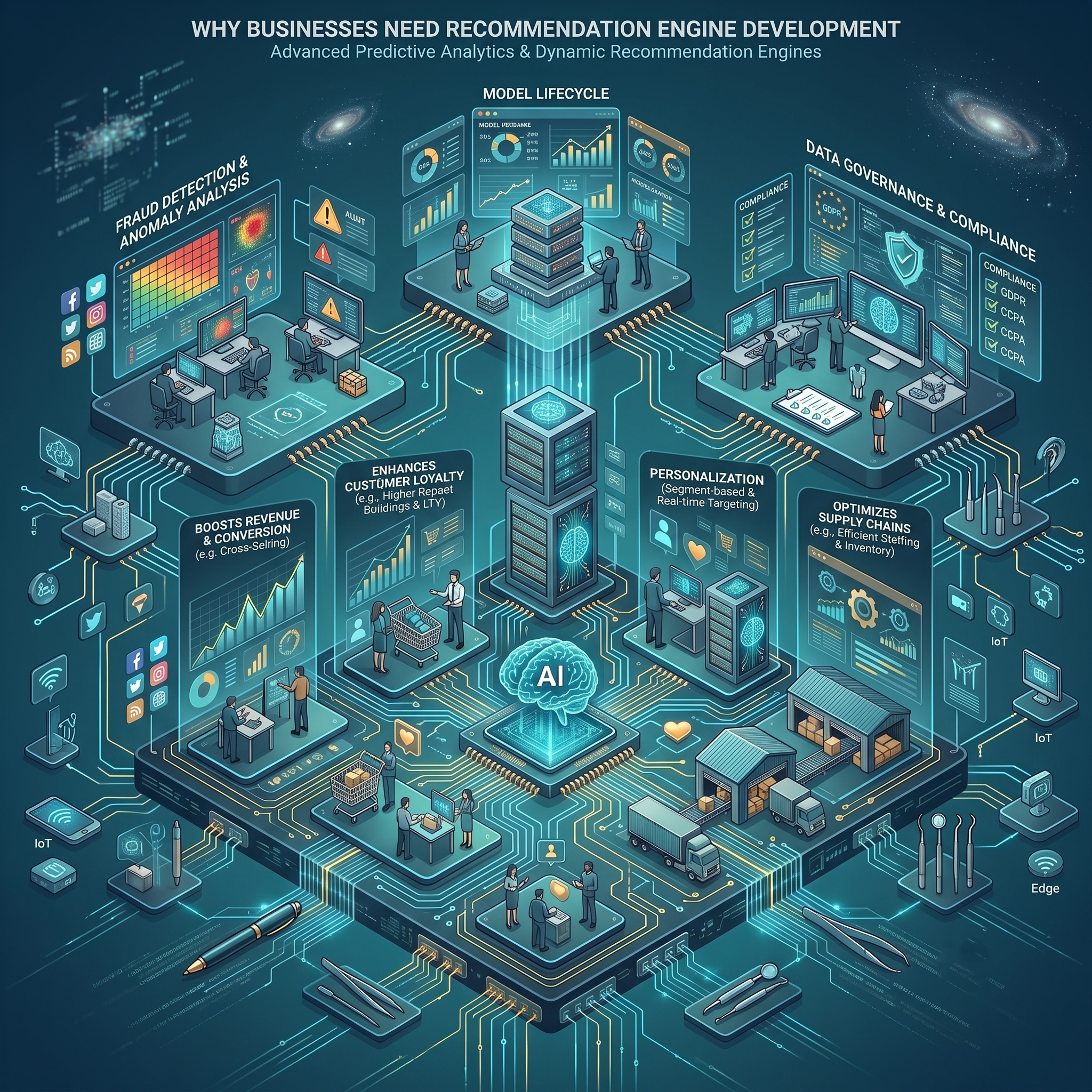
MLOps is not simply "DevOps for machine learning," even though that is the common shorthand. It carries additional complexity that traditional software operations was never designed to handle - models depend on data that changes over time, performance is probabilistic rather than binary pass/fail, and a model can be technically "running" while being functionally wrong. A serious MLOps practice is built around that distinction from day one.
What is MLOps
MLOps, short for Machine Learning Operations, is the set of practices, automation, and infrastructure that takes a trained machine learning model and makes it reliably deployable, monitorable, reproducible, and continuously improvable in a production environment. It borrows heavily from DevOps principles - version control, continuous integration, automated testing, infrastructure as code - but extends them to handle the unique lifecycle of a machine learning model, including data versioning, experiment tracking, model registries, and drift monitoring.
In direct terms: if a data scientist hands over a trained model file and a notebook, and your engineering team has no repeatable, automated way to package it, test it against held-out data, deploy it behind an API, track its live performance, and retrain it when accuracy slips - you do not yet have MLOps, regardless of how sophisticated the underlying model is.
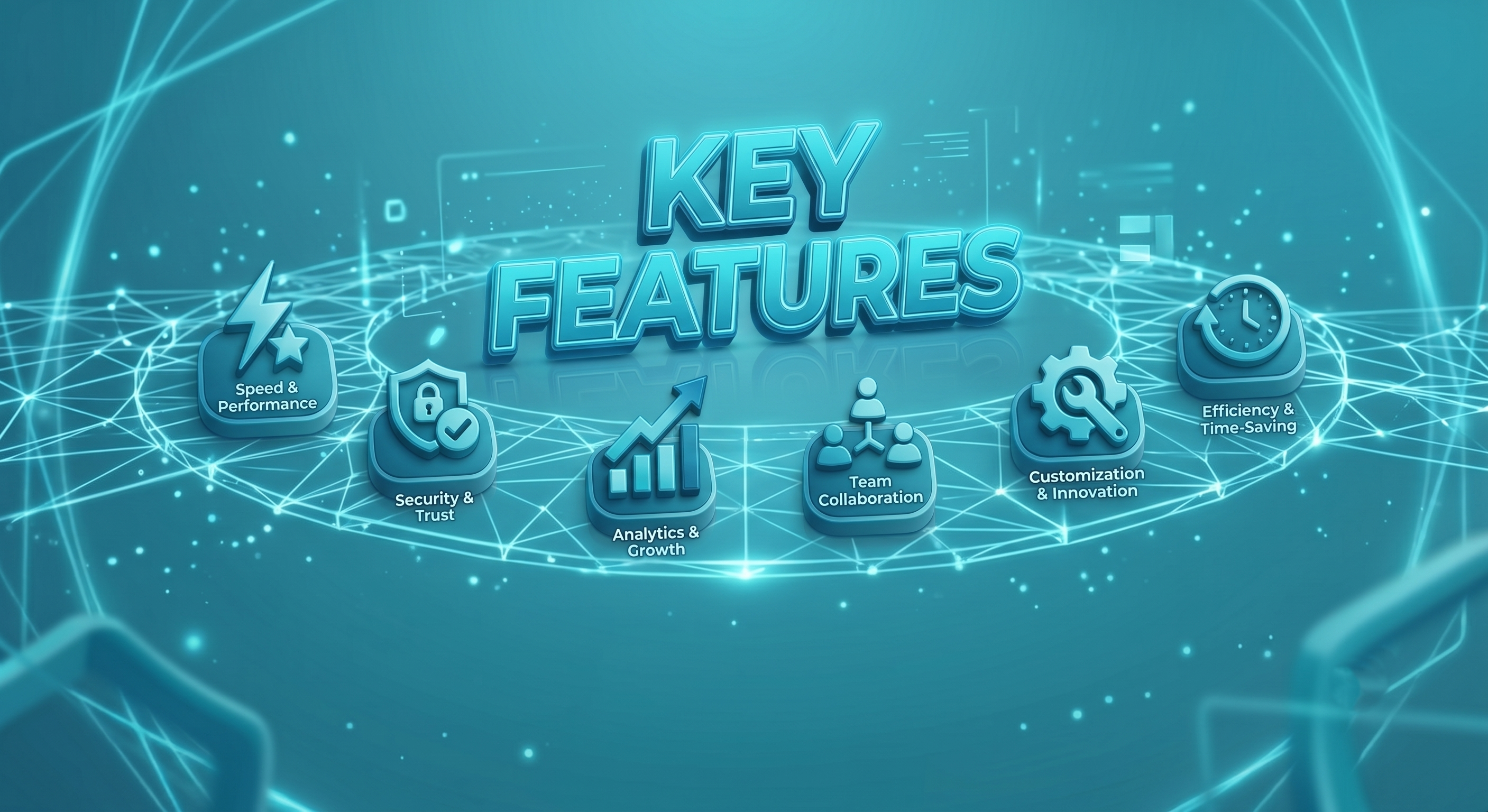
Key Features
End-to-end CI/CD pipelines for models
Automated testing, validation, and deployment triggered by code or data changes, removing manual deployment steps that introduce risk and delay.
Model registries with full lineage tracking
Every deployed model is traceable back to the exact code version, training data snapshot, and hyperparameters that produced it.
Real-time and batch monitoring dashboards
Live visibility into prediction latency, throughput, input data drift, and accuracy decay, surfaced to both engineering and business stakeholders.
Automated rollback and canary deployment
New model versions are rolled out gradually and automatically reverted if live performance dips below defined thresholds.
Feature store implementation
A single source of truth for features used across training and serving, eliminating the common and costly bug of training-serving skew.
Multi-environment infrastructure as code
Reproducible dev, staging, and production environments defined declaratively, removing "it worked on my machine" failures.
Governance and approval workflows
Configurable human-in-the-loop checkpoints for regulated industries where a model cannot go live without sign-off.
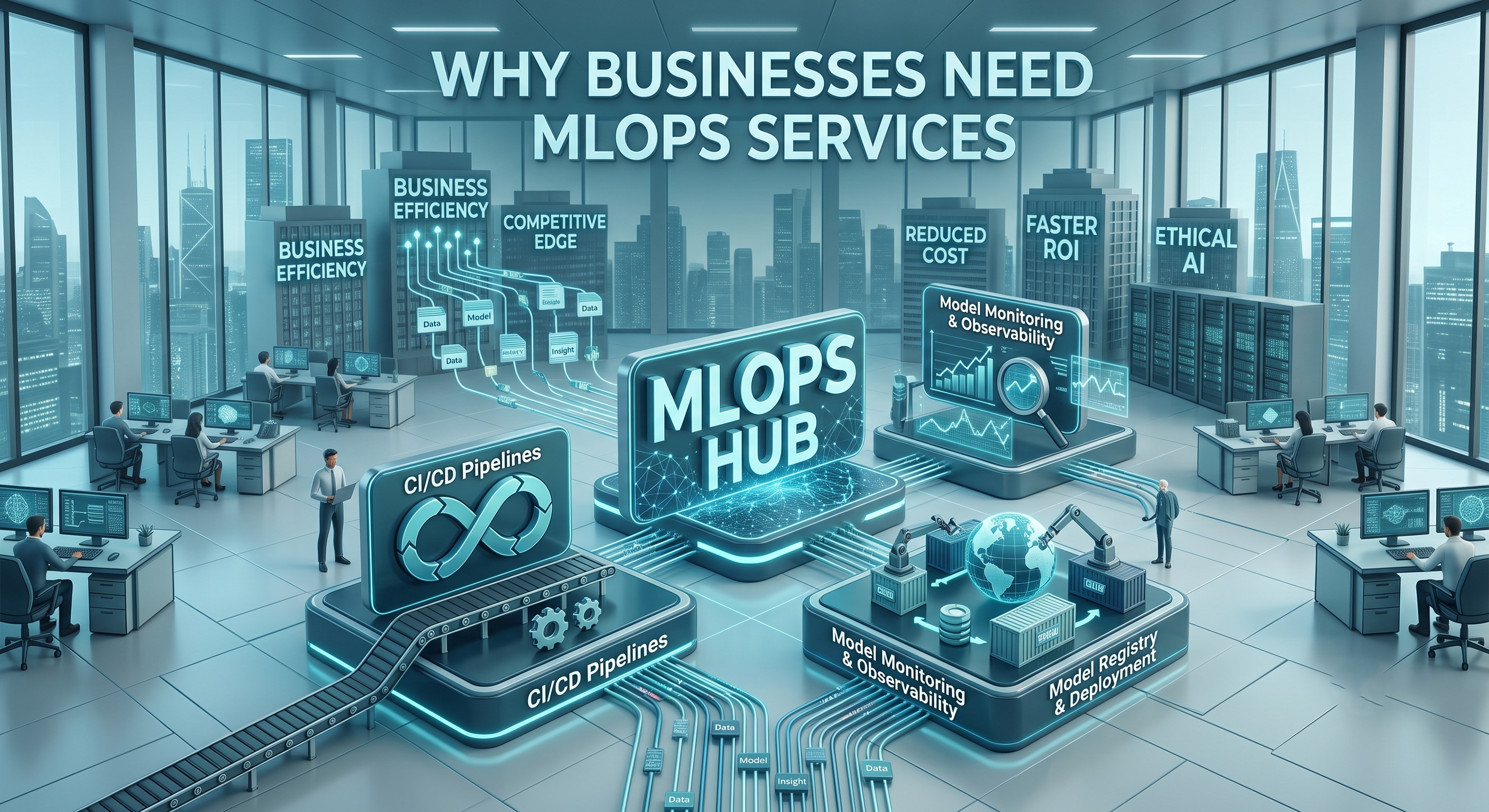
Why Businesses Need MLOps Services
The uncomfortable pattern across enterprise AI adoption is well documented: organisations invest heavily in data science hiring and model development, then significantly under-invest in the operational layer required to run those models reliably. The result is a portfolio of impressive proof-of-concept models that never become dependable production systems, or worse, production systems that silently degrade because nobody owns ongoing monitoring.
This gap exists for a structural reason - building a model and operating a model require genuinely different skill sets. A data scientist optimising for predictive accuracy on a held-out test set is not the same discipline as a platform engineer designing for uptime, rollback safety, and cost efficiency under live production load. Few organisations naturally have both skill sets embedded in the same team from day one, which is exactly why a dedicated MLOps capability - whether built in-house or brought in through a specialist partner - becomes necessary the moment a business has more than one or two models genuinely depended on for daily decisions.
There is also a compounding cost argument. Every month a model runs without proper monitoring is a month of accumulating risk - the longer drift goes undetected, the more decisions get made on a degraded model, and the more expensive the eventual correction becomes, both financially and reputationally. Conversely, organisations that have matured their MLOps practice consistently report being able to deploy new models and model updates several times faster than peers still relying on manual processes, turning operational reliability into a genuine competitive speed advantage rather than just a risk-reduction exercise.
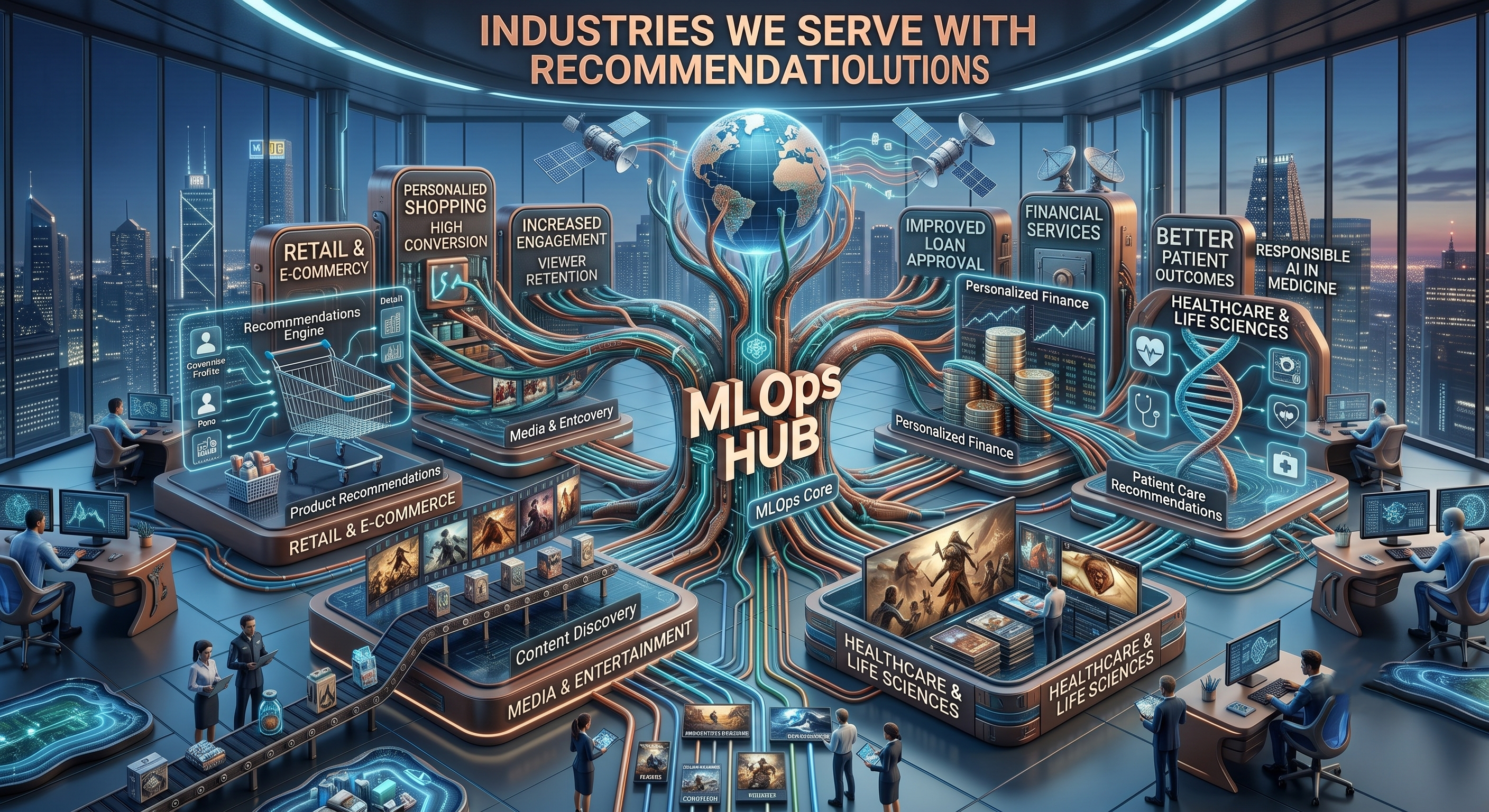
Industries We Serve with Recommendation Engine Solutions
Recommendation engines are most valuable wherever a platform has both a meaningful catalogue of items and a meaningful volume of user interaction data to learn from.
E-commerce & Retail
Product recommendations, cross-sell/upsell, personalised homepage merchandising
Media & Streaming
Content recommendations, next-episode suggestions, personalised content discovery
SaaS & Technology Platforms
Feature and module recommendations, in-app content surfacing, onboarding personalisation
Travel & Hospitality
Destination, accommodation, and activity recommendations based on traveller profile
EdTech & Online Learning
Course and content recommendations based on learning history and goals
Marketplaces
Listing recommendations for buyers, personalised search ranking
Food Delivery & Quick Commerce
Restaurant and item recommendations based on order history and time of day
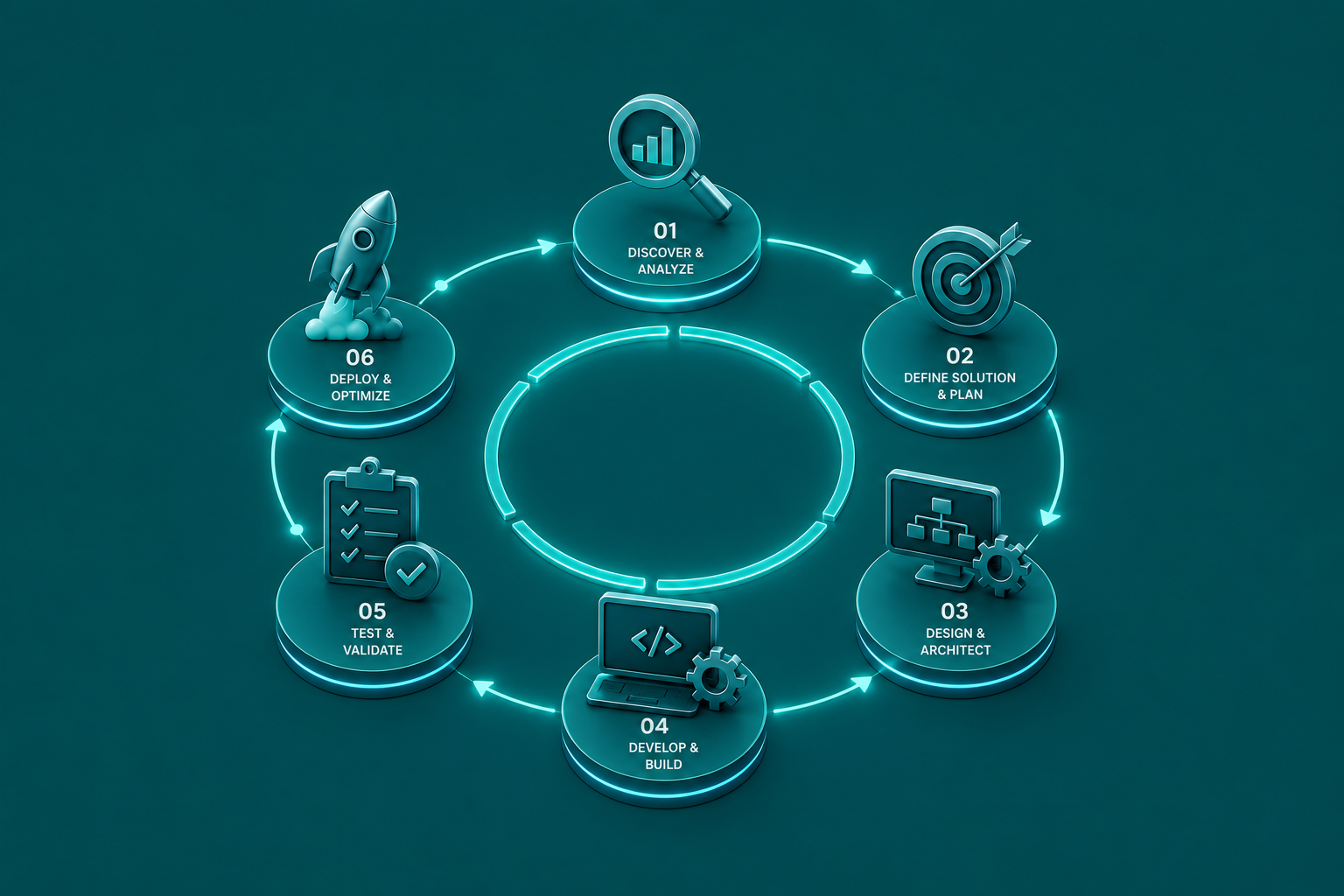
Why Choose Our Company

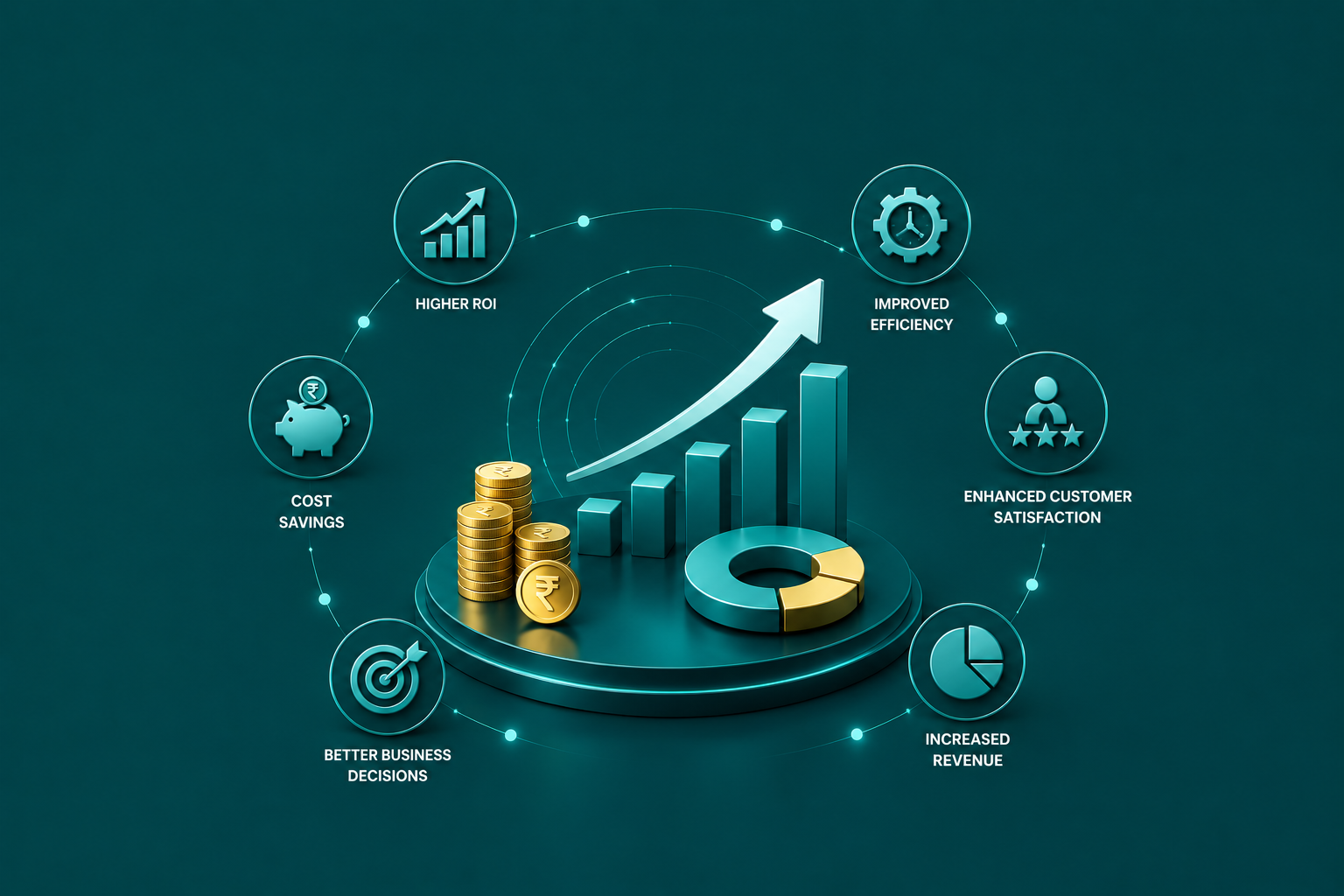
Frequently Asked Questions About MLOps Services
1. What is the difference between MLOps and DevOps?
DevOps focuses on automating and monitoring software code delivery, while MLOps extends those same principles to also handle data versioning, model versioning, experiment tracking, and the unique problem of models that can silently degrade in accuracy even while technically running correctly.
2. How do we know if our organisation needs dedicated MLOps services?
If deploying a new model version takes more than a few days of manual coordination, if nobody is actively monitoring live model accuracy, or if you cannot easily answer "exactly what data and code produced this model," your organisation would benefit materially from a dedicated MLOps practice.
3. How long does it take to set up a basic MLOps pipeline?
An initial CI/CD and monitoring pipeline for a single model family is typically delivered within 6-14 weeks, depending on existing infrastructure maturity and compliance requirements, with each subsequent model onboarded considerably faster.
4. Can MLOps be implemented without migrating to a new cloud platform?
Yes. Most MLOps tooling, including open-source options like MLflow, Airflow, and Feast, can be implemented on top of existing cloud or on-premise infrastructure without requiring a full platform migration.
5. What is model drift and why does it matter?
Model drift occurs when the statistical properties of live input data or the relationship between inputs and outcomes change over time, causing a model's real-world accuracy to degrade even though the model itself has not changed - making drift detection one of the most important MLOps capabilities.
6. Do we need a feature store if we only have a handful of models?
Not necessarily at first, but a feature store becomes increasingly valuable as the number of models grows or as the same features are reused across multiple models, since it eliminates the common and costly inconsistency between training and live serving calculations.
7. How does MLOps help with regulatory compliance?
A properly implemented model registry provides full lineage tracking - exactly which data, code, and approval steps produced a given production model - which directly supports audit requirements in regulated industries like banking, insurance, and healthcare.
8. What happens if a newly deployed model performs worse than the previous version?
With canary deployment and automated rollback in place, a small percentage of live traffic is routed to the new model first, performance is compared against defined thresholds, and the system automatically reverts to the previous version if the new model underperforms.
9. Is MLOps only relevant for large enterprises with many models?
No. Even organisations running a single business-critical model benefit significantly from basic MLOps practices like versioning and monitoring, since the cost of an undetected model failure can be high regardless of how many other models exist.
10. How does MLOps reduce cloud infrastructure costs?
Through infrastructure as code, auto-scaling, and right-sizing reviews, MLOps practices typically eliminate the over-provisioned, manually managed compute resources that accumulate when models are deployed and scaled ad hoc without a systematic operational layer.
11. Can existing data science teams be trained to manage an MLOps platform themselves?
Yes, and we structure every engagement to include documentation and hands-on training specifically so the client's internal team can operate, extend, and troubleshoot the platform independently after handover.
12. What is a model registry and do we really need one?
A model registry is a centralised system tracking every trained model version, its lineage, approval status, and deployment history. It becomes necessary the moment more than one person is involved in deploying models, since it removes ambiguity about which model version is actually live in production.
13. How does MLOps differ for generative AI and large language models compared to traditional ML?
Generative AI introduces additional operational concerns - prompt versioning, output quality evaluation, and per-token cost monitoring - that traditional MLOps tooling was not originally built for, leading to the emerging discipline often called LLMOps, which we treat as an extension of the same underlying MLOps principles.
14. Do you offer MLOps services to clients outside India?
Yes. While headquartered in Chennai with active delivery across Bangalore, Hyderabad, and Mumbai, we serve enterprise clients internationally across North America, the UK, and the Middle East, with engagement processes designed for distributed, asynchronous collaboration.
15. What is the first step to starting an MLOps engagement with InfiniteTech AI?
The first step is an MLOps maturity assessment, typically completed within one to two weeks, where we review your current deployment practices and infrastructure and identify the highest-leverage starting point before any commercial commitment to a full build.