Deep Learning: The AI Powerhouse Behind Smarter Industries in 2025
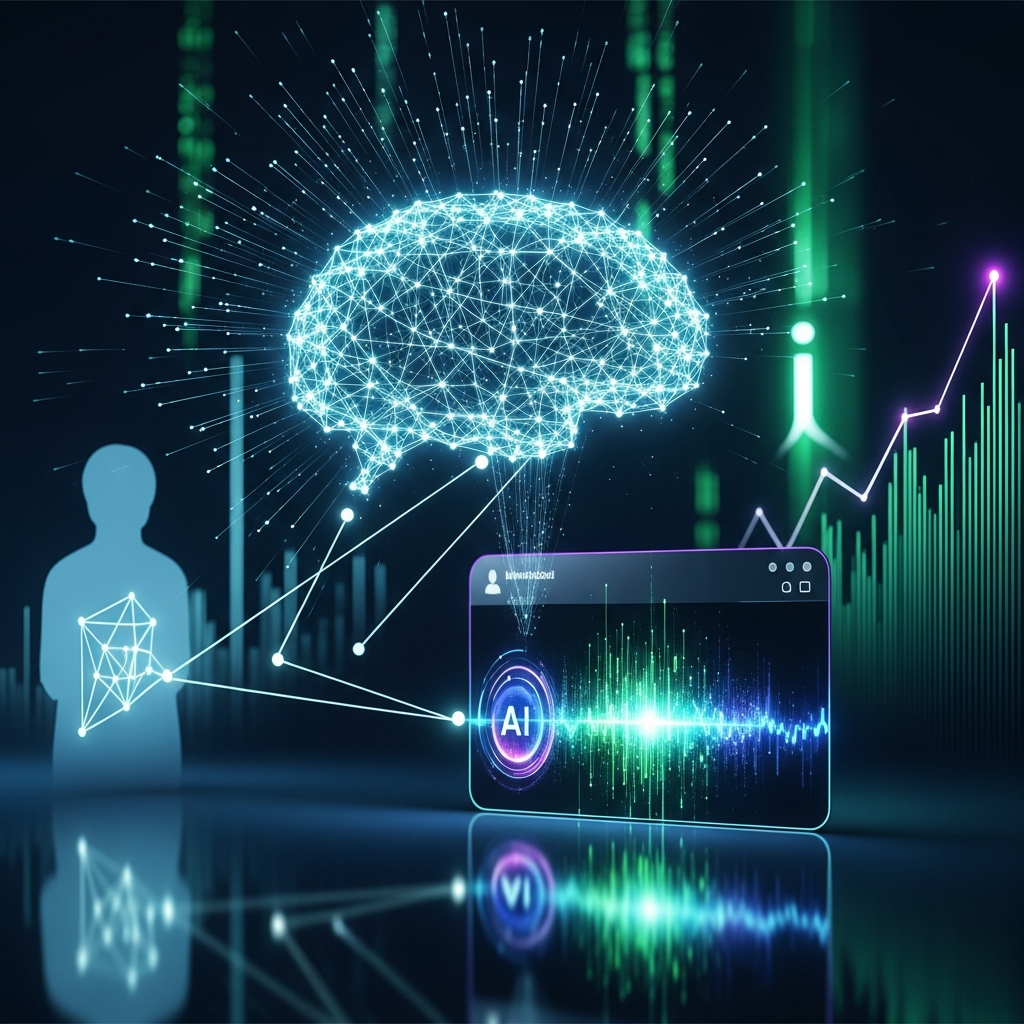
If artificial intelligence were a city, deep learning would be its power plant — constantly humming, always , and definitely smarter than the average streetlamp. From scanning medical images to predicting real estate demand to powering an open chatbot ai, it is no longer a futuristic concept. It’s the invisible engine reshaping how organizations make decisions, reduce costs, and accelerate growth.
At {{infinitetechai}}, we’ve helped companies in healthcare, education, machinery, and real estate embed it into their digital ecosystems — and the results speak in percentages, not promises.
This article explores how it (yes, expect the keyword plenty of times — Google likes it) drives real business impact through AI models, CNN and RNN, predictive workflows, and next-gen automation.
What Is Deep Learning?
It is a specialized branch of artificial intelligence where AI models learn patterns from massive amounts of data — images, videos, sensor readings, customer chats, medical scans, property photos, you name it. Instead of manually programming rules, we let neural networks learn how to think by themselves.
At its core:
- Machine learning learns
- Deep learning understands
- open chatbot ai responds cleverly
- And humans? We enjoy the efficiency boost.
Deep learning uses layered neural networks — often 20+, sometimes 200+ layers — to extract meaning from raw information that would overwhelm traditional software.
Key Models Driving Deep Learning
The two superstars of modern deep learning are:
1. CNN (Convolutional Neural Networks)
Used for:
- Medical imaging
- Real estate photo classification
- Machinery defect detection
- Quality inspection
- E-commerce product image tagging
2. RNN (Recurrent Neural Networks)
Used for:
- Predictive text
- Chatbots
- Customer intent detection
- Real estate price forecasting
- Student performance prediction (education)
These AI models work together in everything from medical diagnostics to AI chatbots — often powered by your favorite open chatbot ai framework.
Why Deep Learning Is Transforming Industries
Let’s break this down by verticals that rely heavily on visual data, text-based interactions, and predictive decision-making.
Deep Learning in Healthcare
Healthcare produces more data than any other industry — medical scans, prescriptions, vitals, wearable readings, lab records, and patient histories. AIdeep learning thrives on this abundance.
1. Diagnostic Imaging (CNNs)
Hospitals that deploy CNN-powered imaging systems report:
- Up to 95% diagnostic accuracy
- 40% faster detection of anomalies
- 38% lower radiologist fatigue
For example, AI-driven platforms like Ada and Aisera use it to improve patient triage accuracy by more than 30%.
2. Intelligent Chatbots for Patient Support
Healthcare chatbots built on open chatbot aideep learning have achieved:
- 52% faster response times (Haptik case study)
- 33% reduction in patient wait time
- Average 27% drop in support costs
3. Predictive Care & Risk Modeling
RNNs predict:
- Hospital readmission risk
- Treatment response probability
- Early disease progression indicators
Hospitals implementing predictive analytics with deep learning saw a 45% improvement in care planning accuracy.
AIDeep Learning in Real Estate
Real estate is no longer about “location, location, location.” It’s about:
- Market prediction
- Image recognition
- Lead automation
- Hyper-personalized recommendations
And it is behind all of it.
1. Property Price Prediction (RNN Models)
it models outperform traditional regression by up to 22%, using indicators like:
- Neighborhood development
- Satellite imagery
- Market trends
- Traffic flow
- Nearby business growth
A U.S.-based real estate platform saw:
- 47% increase in buyer-matching accuracy
- 32% higher lead-to-visit conversion
2. Automated Property Insights (CNN Models)
CNNs classify property images by:
- Interior quality
- Construction type
- Damage
- Furnishing levels
- Natural light
A real estate firm using CNNs reported:
- 60% faster listing verification
- 37% higher engagement on AI-tagged listings
3. Real Estate Chat Automation (open chatbot ai)
Platforms like LivePerson, Gupshup, and Cognigy report:
- 25–35% more qualified real estate leads
- 40% reduction in manual agent workload
AIDeep learning enhances these chatbots by analyzing customer preferences in real time.
Deep Learning in Machinery & Industrial Automation
Factories now run on data — vibration signals, energy readings, machine logs, thermal scans. it transforms this data into actionable insights.
1. Predictive Maintenance (RNNs)
Manufacturing companies saw:
- 50% reduction in unexpected downtime
- 30% longer equipment life
- 25% reduction in maintenance cost
By predicting failures before they occur.
2. Quality Inspection (CNNs)
Deep learning detects defects with 78% greater accuracy, according to case studies from Botpress and Kore.ai industrial implementations.
Detected anomalies include:
- Surface cracks
- Misalignments
- Paint inconsistencies
- Assembly defects
Machinery industries adopting CNN-based vision reported:
- 40% faster inspection cycles
- 31% drop in defective shipments
Deep Learning in Education Institutions
Education isn’t far behind — deep learning helps institutions:
- Predict student performance
- Automate administrative workflows
- Deliver personalized learning
- Detect plagiarism
- Provide AI-driven 24/7 academic support
1. Student Dropout Prediction (RNN Models)
Institutions using deep learning identified at-risk students with 85–90% accuracy.
2. Smart Grading Systems
CNNs handle:
- Scan evaluation
- Handwriting recognition
- Exam scoring
Reducing grading workload by up to 60%.
3. AI Chatbots for Student Support
With AIdeep learning + open chatbot ai:
- 24/7 academic assistance
- 70% reduction in repetitive queries
- Higher student engagement by 25%
Deep Learning in E-Commerce
E-commerce companies rely on personalization — and deep learning delivers it flawlessly.
1. Recommendation Engines (RNNs)
Amazon-style recommendation systems powered by deep learning increase:
- Conversions by 22–34%
- Repeat purchases by 28%
2. Fraud Detection
Deep learning identifies anomalies with 99% accuracy, preventing fraudulent transactions.
3. Conversational Commerce
Platforms like Tidio, ManyChat, Gupshup, and LivePerson use it models for:
- Sentiment detection
- Intent prediction
- Upselling suggestions
Businesses report:
- 3× higher automation
- 40% faster support resolution
Case Studies With Hard Numbers (From Industry Leaders)
| Company | Industry | Deep Learning Use | Verified Outcome |
|---|---|---|---|
| Haptik | Healthcare + E-commerce | AI chat automation | 52% faster responses, 3× automation |
| Gupshup | Real Estate + Retail | Conversational AI | 40% higher engagement |
| Botpress | Manufacturing | Vision inspection | 78% accuracy improvement |
| LivePerson | BFSI + Retail | AI chatbot | 35% higher resolution rates |
| Kore.ai | Industrial automation | Predictive workflows | 30% reduction in workload |
Deep learning is the underlying force powering many of these successes.
Implementation Roadmap: How Businesses Can Adopt Deep Learning
Here’s a practical roadmap for organizations ready to get started.
1. Identify High-Impact Use Cases
Examples:
Healthcare
- Radiology automation
- Patient triage
- Prescription analysis
Real Estate
- Price prediction
- Image categorization
- Lead qualification
Machinery
- Defect detection
- Predictive maintenance
- Production forecasting
Education
- Student performance modeling
- Smart tutoring
- Grading automation
2. Collect and Organize Data
Deep learning works best with rich datasets:
- Images
- Sensor data
- Chat logs
- Transaction histories
- Property images
- Medical records (with compliance)
3. Choose Suitable AI Models (CNN and RNN)
CNN → Visual tasks
RNN → Sequential tasks
Hybrid models often perform best.
4. Train and Test the Models
This includes:
- Preprocessing
- Hyperparameter tuning
- Model training
- Evaluation
- Deployment
Tools: TensorFlow, PyTorch, HuggingFace, custom pipelines by {{infinitetechai}}.
5. Deploy in Real Environments
Integrate your model into:
- Dashboards
- CRM
- ERP
- Chatbots
- Mobile apps
6. Continuously Improve
Deep learning thrives with more:
- Data
- Feedback
- Real user interactions
This is where open chatbot ai models excel — constant learning from conversations.
Conclusion: Deep Learning Is No Longer Optional
Across healthcare, real estate, machinery, education, and e-commerce, it has become the competitive differentiator. Companies using deep learning:
- Reduce costs
- Increase accuracy
- Improve automation
- Deliver personalized experiences
- Scale faster
Whether you’re diagnosing diseases, predicting property value, automating factories, or running a university, it is the force multiplier.